Learn Across Disciplines
Hear from scholars working in computer science, software and systems engineering, philosophy, organizational research, inclusion, and society.
A lunchtime talk series bringing together researchers and practitioners from computer science, social science, philosophy, and design to explore the role of technology in society.
Through talks and discussion, the series focuses on systems, society, AI, inclusion, and human agency.
Technology shapes how we work, interact, and make decisions, yet it is often designed within disciplinary silos. This series creates a space for dialogue across fields and for deeper reflection on responsibility, values, and societal impact.
Hear from scholars working in computer science, software and systems engineering, philosophy, organizational research, inclusion, and society.
Each session combines a talk with open discussion designed to surface different perspectives.
Meet others interested in human-centered approaches to systems, AI, and digital transformation.
The series brings together perspectives from software and systems engineering, AI, philosophy, sociotechnical studies, and global contexts.

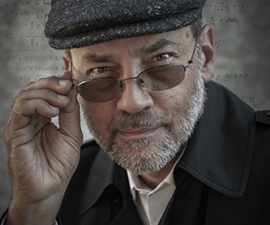



Dates will be announced soon. Click a speaker's photo or name to visit their website.
Risks connected with AI systems are now a recurrent topic in public and academic debates. In this talk I will offer a philosophical analysis of such risks with the aim of providing a comprehensive and general framework to think about AI-related risks. First, by building upon the existing literature on natural disaster risk analysis, I will present a multi-component analysis of risk and discuss its benefits in terms not only of conceptual clarification but also of possible mitigation. Second, by adopting a multi-hazard and multi-risk framework, I will analyze AI-related risks as potentially emerging from the combination of the risks related to the different elements of the AI system and its context of use. This talk will provide a concrete example of the vital role of philosophical analysis for human-centered AI technologies.
Viola Schiaffonati is Full Professor of Logic and Philosophy of Science at the Department of Electronics, Information and Bioengineering of Politecnico di Milano. Viola Schiaffonati's research interests lie at the intersection of philosophy of science and technology and computer engineering. Her current research focuses on the following themes: the epistemological and ethical aspects of AI, ML, robotics and digital technologies; the investigation on the nature and role of experiments in computer engineering; the role of simulations in robotics.
Data-driven techniques such as large language models have proved astonishingly powerful, yet progress with cyber-physical systems such as robots has been slower. The usual explanation is insufficient training data. In this talk I explore a more fundamental possibility: knowledge acquired through observation differs from knowledge acquired through embodied interaction. Using Shannon information theory, I distinguish the information observed about a physical object from the information contained in that object. Under continuum models of physics, an exact physical state cannot be represented by any finite sequence of bits, while every noisy measurement reveals only finitely many bits. It is therefore a mistake to infer from the digital representability of observations that physical reality itself is digital. Interaction does not eliminate this limitation, but it enables an agent to correlate its actions with their consequences and thereby construct a causal model of itself in the world. This may explain why some capabilities cannot be learned from observational data alone: learning to ride a bicycle may require getting on one, even for a robot. Cyber-physical systems, which embed computational processes into physical ones, are therefore fundamentally richer than computational processes alone.
Edward A. Lee is Professor of the Graduate School and Distinguished Professor Emeritus in Electrical Engineering and Computer Sciences (EECS) at the University of California at Berkeley, where he has been on the faculty since 1986. He is the author of seven books, some with several editions, including two for a general audience, and hundreds of papers and technical reports. Lee has delivered more than 200 keynote and other invited talks at venues worldwide and has graduated 40 PhD students. His research group studies cyber-physical systems, which integrate physical dynamics with software and networks. His focus is on the use of deterministic models as a central part of the engineering toolkit for such systems. He is the director of iCyPhy, the Berkeley Industrial Cyber-Physical Systems Research Center. From 2005-2008, he served as Chair of the EE Division and then Chair of the EECS Department at UC Berkeley. He has led the development of several influential open-source software packages, notably Ptolemy and Lingua Franca. He received his BS degree in 1979 from Yale University, with a double major in Computer Science and Engineering and Applied Science, an SM degree in EECS from MIT in 1981, and a Ph.D. in EECS from UC Berkeley in 1986. From 1979 to 1982, he was a member of technical staff at Bell Labs in Holmdel, New Jersey, in the Advanced Data Communications Laboratory. He is a co-founder of BDTI, Inc., where he is currently a Senior Technical Advisor, and has consulted for a number of other companies. He is a Fellow of the IEEE, was an NSF Presidential Young Investigator, won the 1997 Frederick Emmons Terman Award for Engineering Education, received the 2016 Outstanding Technical Achievement and Leadership Award from the IEEE Technical Committee on Real-Time Systems (TCRTS), the 2018 Berkeley Citation, the 2019 IEEE Technical Committee on Cyber-Physical Systems (TCCPS) Technical Achievement Award, the 2022 European Design and Automation Association (EDAA) Achievement Award, the 2022 ACM SIGBED Technical Achievement Award, and an Honorary Doctorate in Computer Science from the Technical University of Vienna.
The Kaspar robot has been used with great success to work as an education and social mediator with children with autism spectrum disorder. Enabling the robot to automatically generate causal explanations is key to enrich the interaction scenarios for children and promote trust in the robot. In our research, we analysed the human-robot interactions in which causal explanations can contribute substantially to the child's understanding of Visual Perspective Taking (VPT). The results helped us identify multiple interaction categories that benefit from causal explanation (Sarda et al. 2022). Subsequently, we developed a theory of causal explanation to be embedded in Kaspar and built a causal model and an analysis method to calculate causal explanations. We implemented our method to automatically generate causal explanations spoken by Kaspar (Araujo et al. 2022). We validated our explanations for user satisfaction and brought the robot to a school. The results revealed that children improved their VPT abilities significantly when the robot provided causal explanations (Sarda et al. 2023).
References:
(Holthaus et al. 2026) P. Holthaus, G. Lakatos, M.S. Gou, S. Moros, L.J. Wood, B. Robins, H. Araujo, Ch.A.E. deGraft-Hanson, M.R. Mousavi, and F. Amirabdollahian. Kaspar Explains: An Educational Platform Using Causal Explanations to Support Children with Autism with Visual Perspective Taking. International Journal of Social Robotics. Springer, 2026.
(Sarda et al. 2023) M. Sarda Gou, G. Lakatos, P. Holthaus, B. Robins, S. Moros, L. Jai Wood, H. Araujo, C. A. E. deGraft-Hanson, M. R. Mousavi, F. Amirabdollahian. Kaspar Explains: The Effect of Causal Explanations on Visual Perspective Taking Skills in Children with Autism Spectrum Disorder. Proceedings of the 32nd IEEE International Conference on Robot and Human Interactive Communication (RO-MAN 2023), IEEE, 2023.
(Araujo et al. 2023) H. Araujo, P. Holthaus, M. Sarda Gou, G. Lakatos, G. Galizia, L. Wood, B. Robins, M.R. Mousavi, and F. Amirabdollahian. Kaspar Causally Explains, Proceedings of the 14th International Conference on Social Robotics, Lecture Notes in Computer Science, Springer, 2022.
(Sarda et al. 2022) M. Sarda Gou, G. Lakatos, P. Holthaus, L. Jai Wood, M.R. Mousavi, B. Robins, and F. Amirabdollahian. Towards understanding causality – a retrospective study of using explanations in interactions between a humanoid robot and autistic children. Proceedings of the 31st IEEE International Conference on Robot & Human Interactive Communication (RO-MAN 2022), IEEE, 2022.
The sessions will be hosted virtually via Zoom. Click below to join the live session.
The seminar series is supported by the ASSURE project, within MDU's multidisciplinary initiative.
For questions, collaboration inquiries, or speaker suggestions, please get in touch.